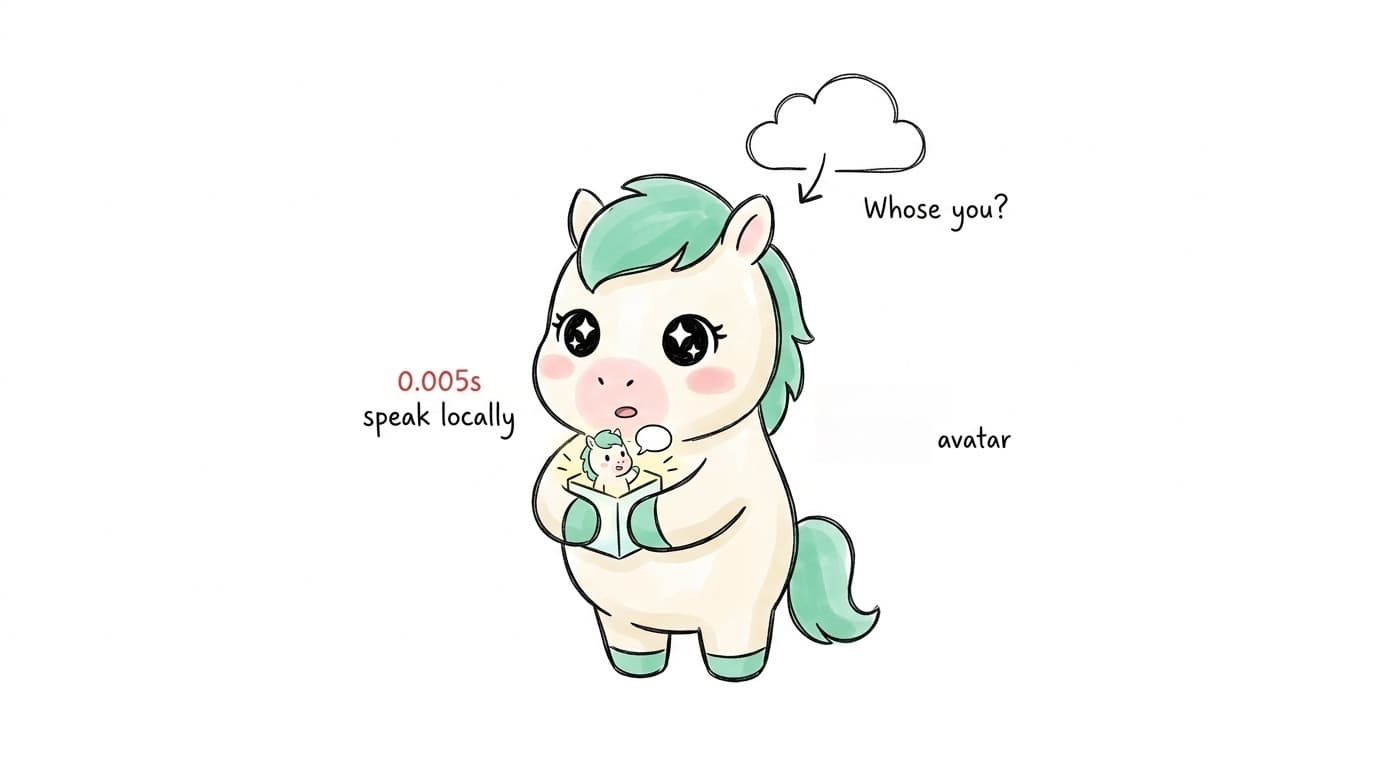
EmbodyMe, the Tokyo company behind the digital-avatar product DigiSelf, shipped an update this week. On October 21 Tokyo time, its official blog announced a new offline path: a real-time avatar that used to depend on a cloud API can now run inside a local SDK, with the entire conversation computed on your own hardware instead of passing through EmbodyMe's servers.
DigiSelf itself isn't new — upload one photo and you get a talking avatar that drops into Zoom, Teams, or Google Meet. What's new is the offline path, and a number in the announcement: local response as fast as 0.005 seconds to first sound. That figure comes from EmbodyMe's own testing, not an independently audited benchmark — worth saying up front.
A digital-human product adding an offline deployment option sounds like routine news. But step back and it lands right on a question the whole agent industry has been sidestepping this year: to let an AI represent you — speak as you, show your face — you first have to hand over a piece of "you." To whom? How much? Onto whose machine?
1. From "One Call" to "Long-Term Me": the Risk Tier Changed
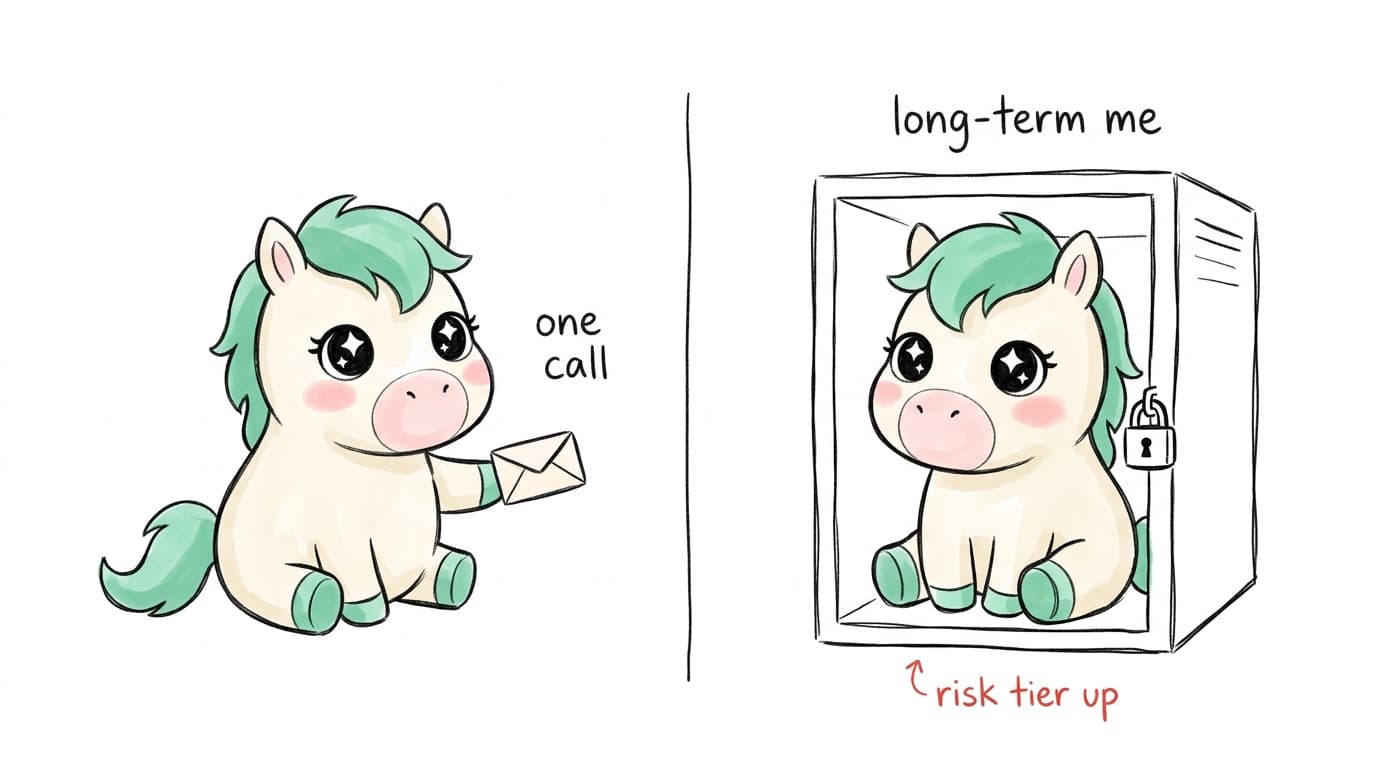
Using cloud AI used to mean one-off calls. You dropped in a block of text or an image, it returned a result, and the relationship ended there. The data was sensitive, but the boundary was clear: you knew exactly what you handed over, that one time.
A digital avatar isn't that kind of relationship. One that attends meetings and replies to messages with your face and your voice, taking positions on your behalf, turns a piece of "you" into a long-lived asset that gets called again and again — not one call, but long-term me.
The risk here isn't in the same order of magnitude.
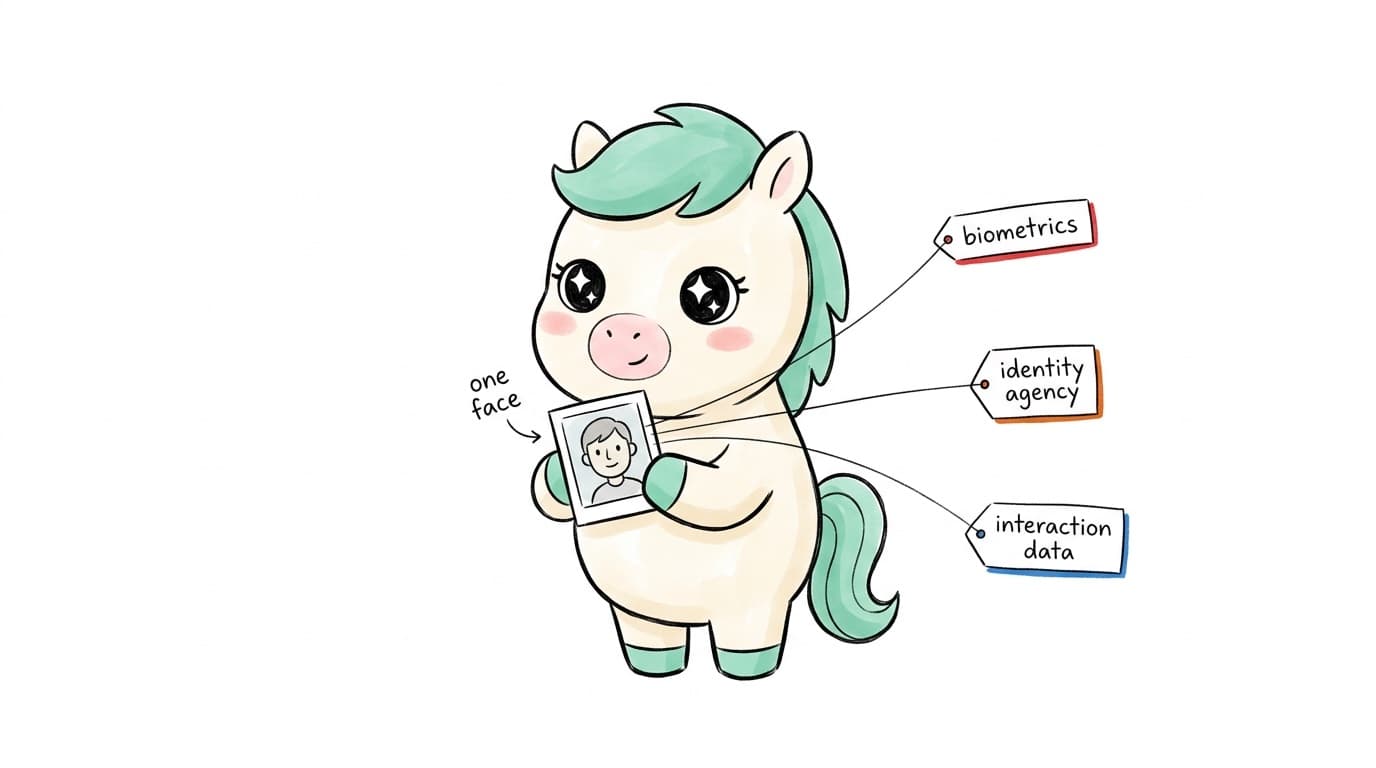
Sending one photo to the cloud looks like just a file. But once it's used to generate an avatar that speaks and responds in real time, the cloud ends up holding three things: your biometrics (face, expressions, lip shapes, possibly your voiceprint), your identity agency (which meetings and conversations this avatar can appear in, in your name), and your interaction data (what it said for you, who it met, where it showed up).
Each of those three is sensitive on its own; stacked together, they amount to a digital version of you. Once that lives permanently on someone else's servers, control over "yourself" has moved out of your hands and into their ops and compliance process. What makes DigiSelf worth singling out isn't generating a digital human — plenty of products already do that — it's the explicit offline path that lets this asset stay on your own hardware instead.
Offline is moving from "technically possible" to "something vendors have to offer."
2. Cloud vs. Local: Not a Performance Fight, an Ownership Fight
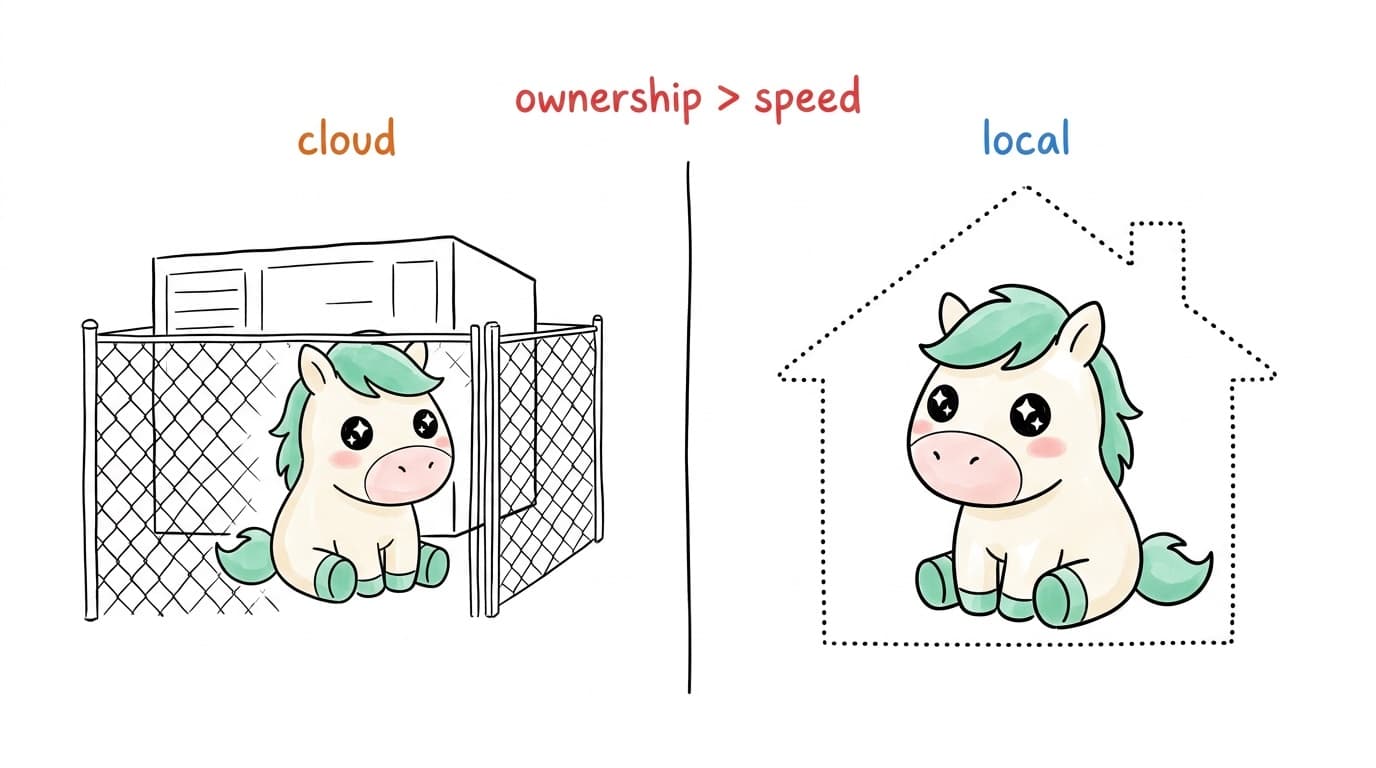
The first instinct is to read this as a latency-and-compute contest — cloud has more horsepower, local has lower latency. But the real dividing line isn't performance. It's ownership.
Cloud avatars have real upsides: ready out of the box, no compute to maintain, models that keep improving, more than enough for a lot of lightweight scenarios. The cost is that ownership gets handed over. Your avatar lives in someone else's data center. Whether it works depends on whether their service is up; whether it's safe depends on whether their defenses hold; whether it stays depends on their business decisions. When what's being handed over carries your face and your identity, that's nothing like handing over a chat log.
A local or offline avatar buys you more than the phrase "data security." It buys something more fundamental: the model and the data run on your own hardware, the live feed in a meeting never routes through a third party, and a face, a voice, a record of standing in for you all stay inside your device boundary. The thing representing you has clear title — yours.
While cloud agents keep competing on who's smarter and who wires up more tools, a route that says "runs locally too, data stays off the cloud" is like planting a sign beside the whole track: smart is the premise; ownership is the floor.
3. Why "The Choice" Beats "Either/Or"
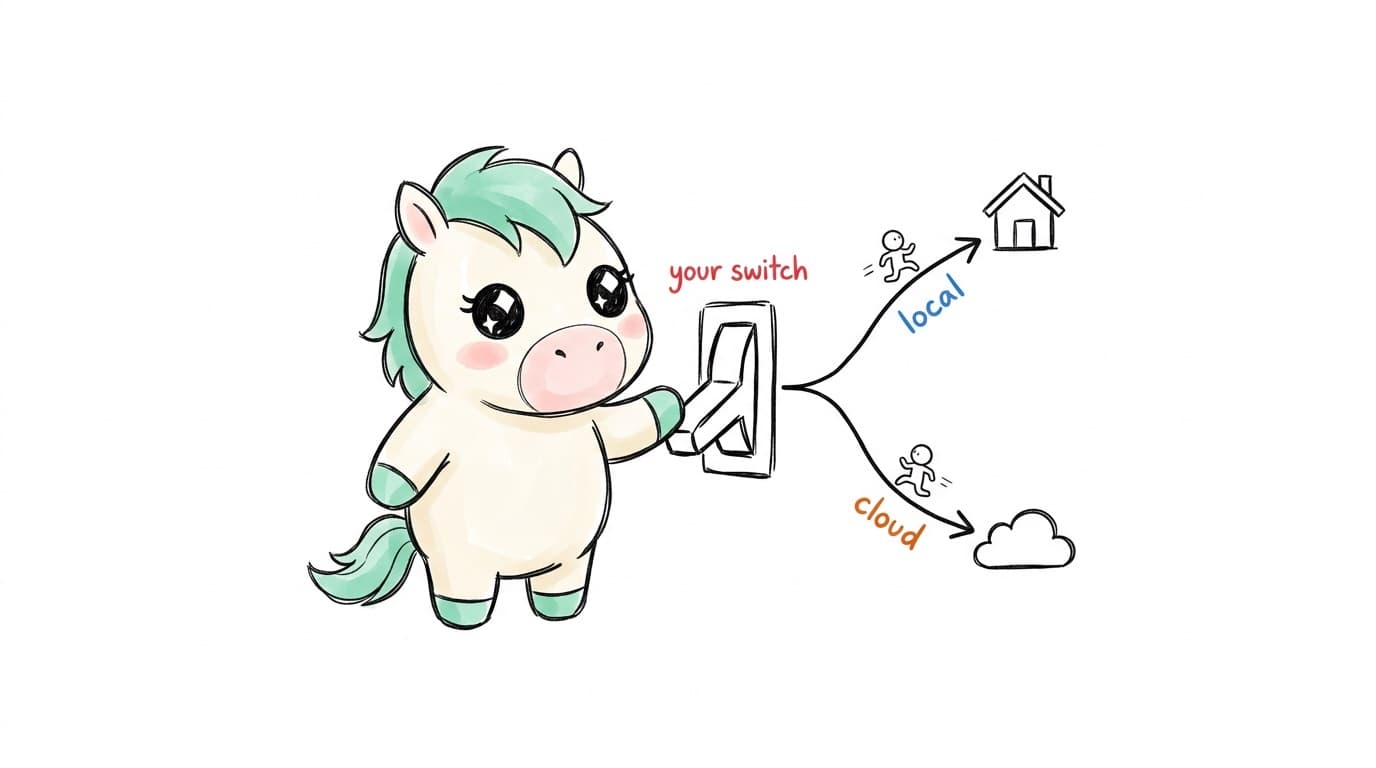
But concluding from this that "cloud is bad, local is right" misses the point too. Real needs are never either/or. An outward-facing avatar that needs brand review may fit better in a centrally managed cloud. An avatar handling sensitive internal meetings with undisclosed information should stay local, with not a byte leaving. An avatar running routine batch work might run cheaper local when compute is idle and burst to the cloud at peak.
Don't force users to pick between convenience and sovereignty. Put the switch in their hands — per scenario, per sensitivity level, per cost — and let them decide where each avatar runs.
DigiSelf offers two legs: cloud and offline. A team embedding AI across an entire business flow needs something more — one unified place that governs a whole fleet of avatars at once and sets the operating boundary for each one individually.
How to Do This with KarmaBox
This is information about our own product, not an independent review.
KarmaBox was designed from exactly this starting point — sovereign avatars plus local/cloud of your choosing — letting you decide, for each avatar, where it runs and where its data stays. Local/cloud of your choosing: each avatar's run location is set independently. Sensitive-business avatars run on your own hardware with data staying inside the network; lightweight outward tasks burst to the cloud. Multi-sovereign-avatar orchestration: manage a fleet of purpose-built avatars (outward-facing voice, internal meetings, batch execution) from one unified workbench, with each avatar's permission and data boundaries clear. Per-avatar permission boundaries: define what each avatar may invoke, where it may appear, and what it can decide in your name — outward stays outward, internal stays internal, guarding against impersonation at the source. If this approach is useful to you, take a look at karmaboxai.com. If it isn't a fit, no problem — the layering approach above works with any tool.
4. Two Things to Settle Before You Deploy
Offline avatars sound appealing, but putting them to real use means clearing two hurdles. The first is the real cost of local compute: running offline means carrying the compute yourself, and a real-time digital human is hardware-hungry — a small team may not be able to afford a local rig that runs one smoothly. A workable path isn't chasing "all local" from day one, but putting the most sensitive, must-not-leave avatars on local first, keeping the rest in the cloud, controlling cost with hybrid deployment, and shifting more weight local as volume and sensitivity grow.
The second is the boundary against identity misuse: the more an avatar looks like you and can act for you, the heavier the fallout if it's impersonated. Who can invoke your avatar, where it may appear, what it can decide in your name — if those boundaries aren't drawn ahead of time, convenience turns into risk. The fix is giving each avatar explicit permission boundaries and use cases, so no single avatar holds the power to fully represent you, with outward staying outward and internal staying internal.
Closing: Smart Is the Ticket In, Ownership Is the Moat
What this update really points to isn't how fast a digital human can speak. It's a piece of common sense the cloud wars have buried: the more an AI can represent you, the more it should be you who decides where it lives. Cloud agents will keep getting smarter — that trend isn't stopping. But once an AI starts acting with your face, your voice, your identity, smart is only the ticket in. Who the thing actually belongs to is the real moat.
Speaking locally in 0.005 seconds is cool. But the question worth more than speed is this: in the cloud-agent wars, the "you" you should guard most — whose machine is it about to run on?
Are you ready to take "you" back into your own hands?
Data note: descriptions of DigiSelf and EmbodyMe's features and response speed come from EmbodyMe's official blog and press release — vendor-reported, not independently audited. References to Muse and similar names are used as general industry context, not an evaluation of any specific vendor's product.