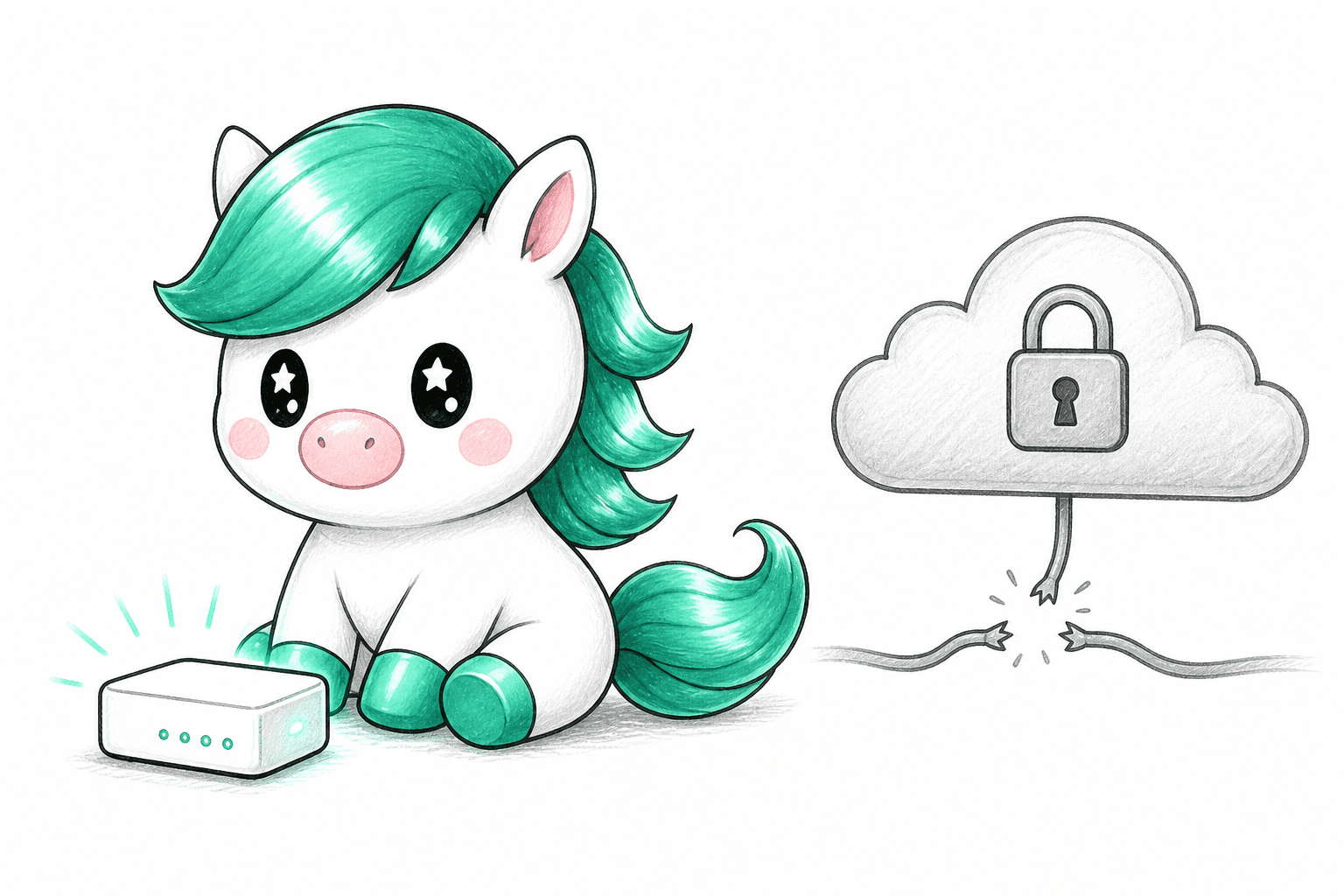
On April 17, 2026, Pato Molina, founder of a Buenos Aires startup, posted something simple on social media: Anthropic had cut off his company's entire access to Claude, with zero warning. More than 60 employees lost every integration, every custom skill, every conversation history in their accounts at the same moment — this wasn't one person's account breaking, it was the whole organization's access getting severed at once. Worse, the company's own product called Claude's API, and the dedicated account managing that API key got banned too, which meant their product itself lost its AI capability that same morning. The only channel for appeal was a Google form.
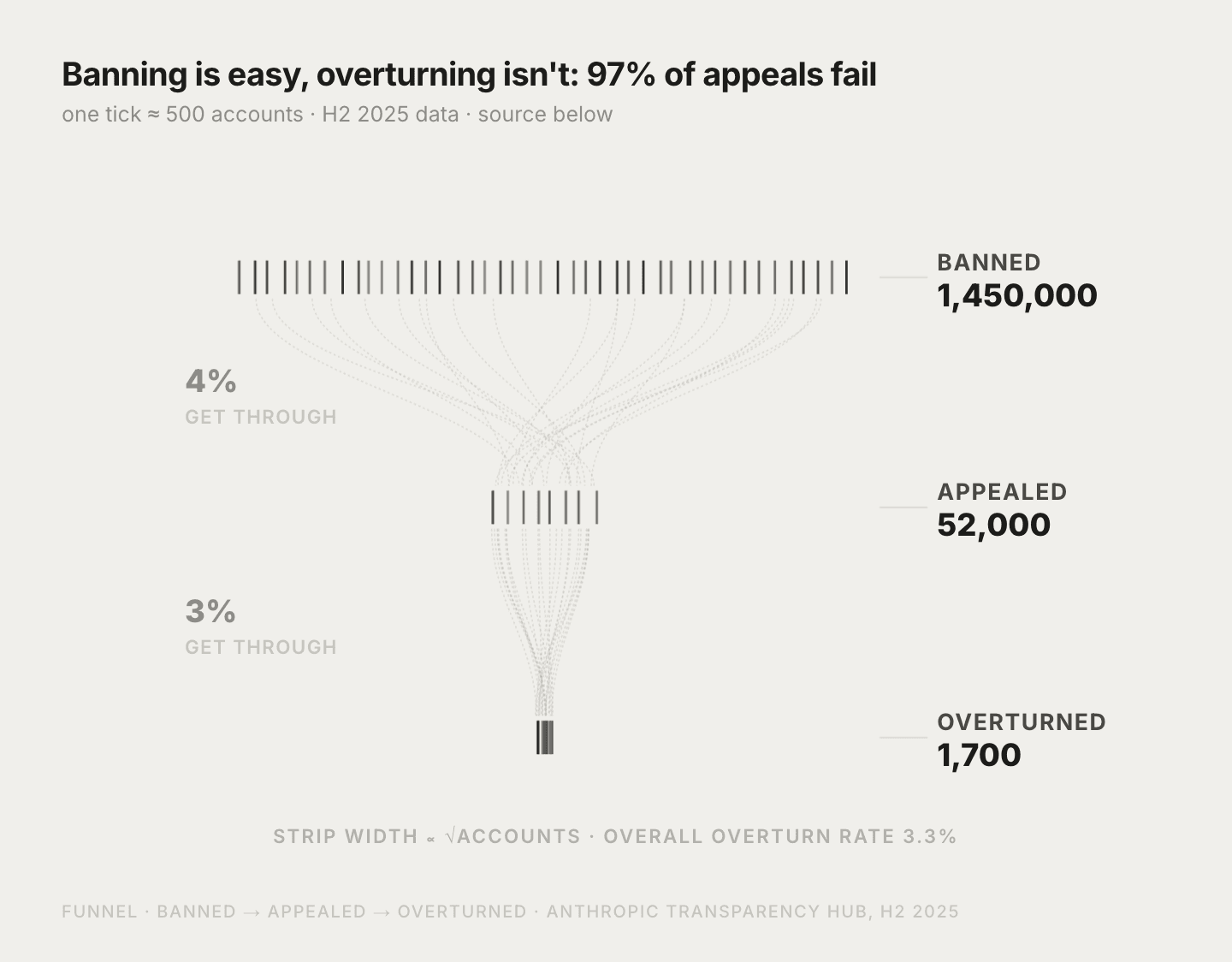
This wasn't a one-off. Anthropic's own Transparency Hub (its official transparency report) discloses that in the second half of 2025 alone, the company banned roughly 1.45 million accounts and processed about 52,000 appeals — of which only around 1,700 were overturned. That's a 3.3% reversal rate. In other words, a decision made by an automated system, severe enough to strip a company of its primary production tool overnight, stays in place 97% of the time. This isn't a claim that Anthropic did anything wrong — risk control and compliance review are necessary. The question is how much exposure you can tolerate when your work, your product, and 60 people's daily output all hang off one account, one rulebook, and a review system whose internal logic you can't see.
What is a sovereign AI workspace
A sovereign AI workspace is an AI environment where the compute, data, model choice, and working memory stay under the user's own control, instead of being bound to a single cloud vendor's account. It's a different problem than data compliance — compliance asks whether your data is allowed to live somewhere; sovereignty asks whether your work can keep running if that vendor decides tomorrow that you can't use it anymore. The concept used to show up almost exclusively in enterprise compliance contexts — banks, governments. But what happened to Pato Molina shows the same exposure hits a 60-person company just as hard; the only difference is that large enterprises have the resources to build a fallback, and individuals and small teams, until recently, didn't.
The four layers that have to be yours
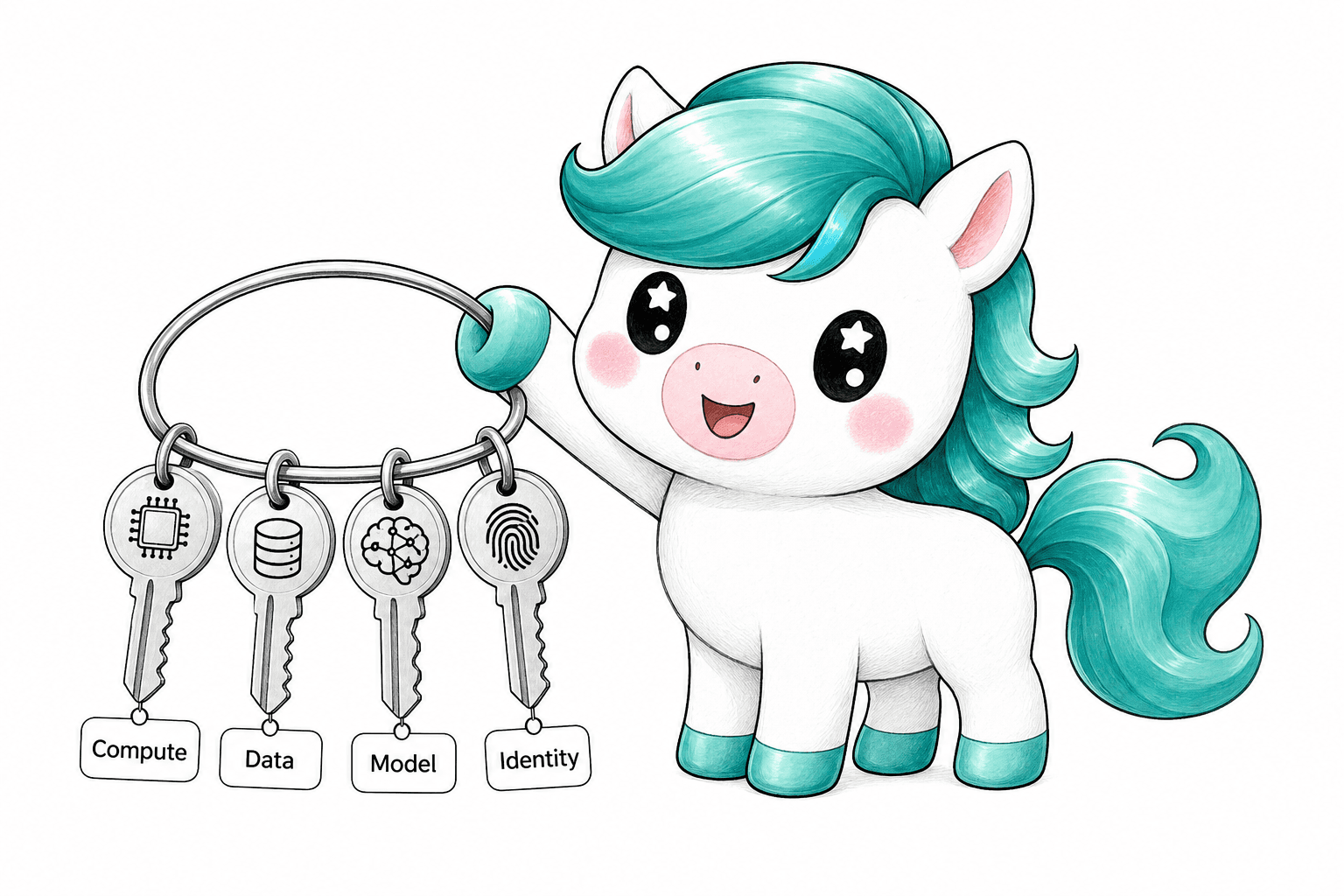
Most people evaluate AI tools on one axis: how good are the answers. That axis matters, but it tells you nothing about whether the tool will still be there in eighteen months, or whether the work you put into it can leave with you. I find it more useful to separate four layers. Each can be owned or rented independently, and most teams are renting at least two without knowing it.
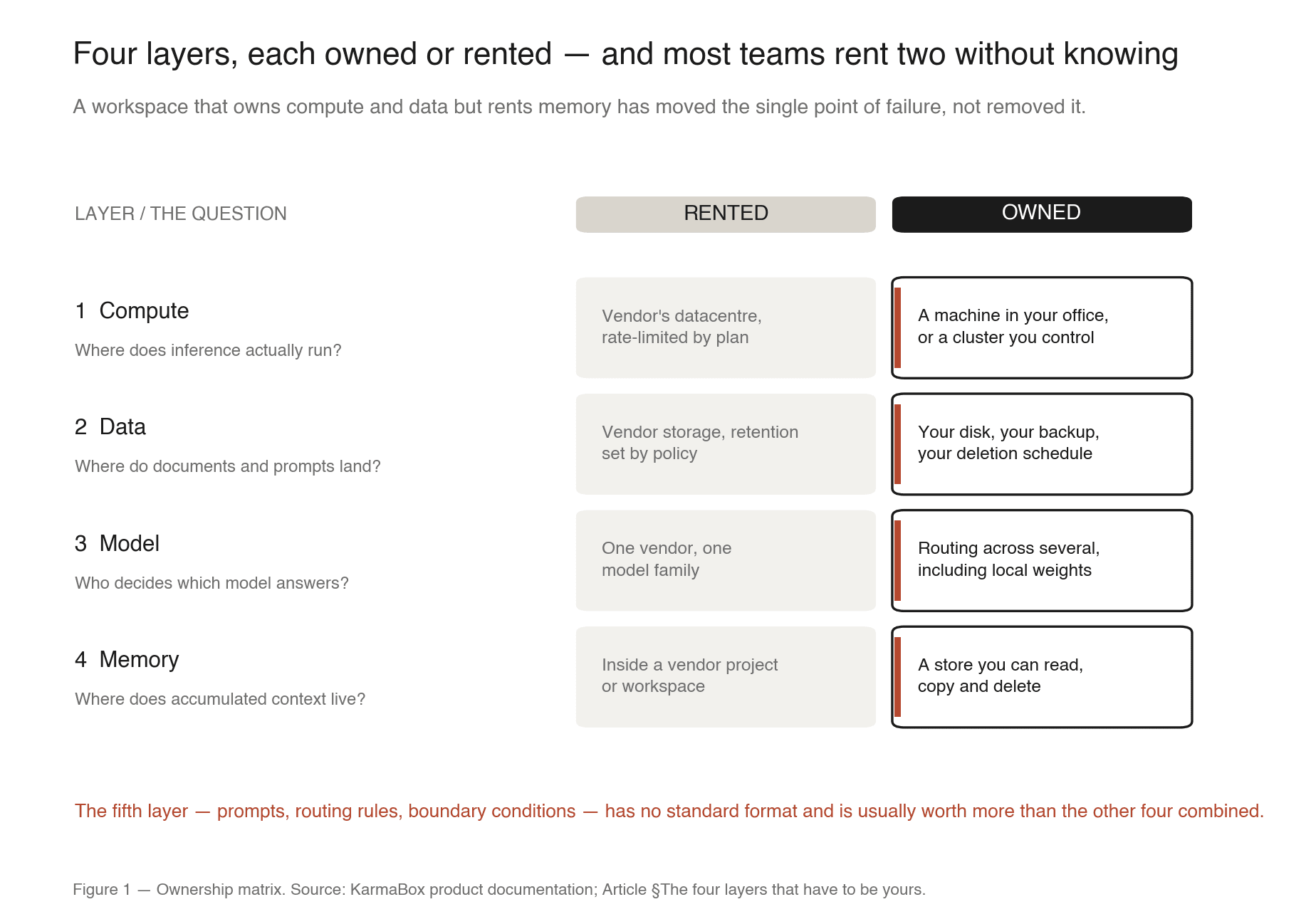
A workspace that owns compute and data but rents memory is still fragile. You can run inference locally all day, and if the thing that remembers your last six months of decisions sits behind someone else's login, you have moved the single point of failure rather than removed it. Most sovereign-AI marketing goes quiet past the third layer. There is a fifth layer that rarely gets mentioned, and I think it is the most consequential: your prompts, your routing rules, the boundary conditions you tuned over months, the folder structure your agents expect. This layer has no standard format. It is not exported by anything. And it represents your team's actual learning. Ask a vendor what happens to that layer if you leave. The honest answers range from "you can copy the prompts out one by one" to silence. Neither is a migration path, and almost nobody asks before signing.
Cheap and stable are both temporary
If a banned account is a low-probability-but-fatal risk, price swings are the everyday risk every heavy user eventually hits. On August 16, 2026, DeepSeek notified developers of a price increase: V4 API pricing rose anywhere from 51% to roughly 1,100% depending on tier, alongside newly introduced peak-hour pricing — and the cache-hit discount that underpinned its cost advantage (previously up to 98% off) got hiked by as much as 12x. GitHub Copilot took a different route: the sticker price didn't move, but billing shifted from per-request to per-token, and heavy agentic users saw real costs rise 3 to 4x, with some models carrying multipliers as high as 27x. OpenRouter (a platform that routes requests across multiple model APIs) ran a more direct comparison: tracking the same cohort of users who'd primarily run GPT-5.4 before switching to GPT-5.5 at launch — same workflow, same usage pattern — and found real costs rose 49% to 92%.
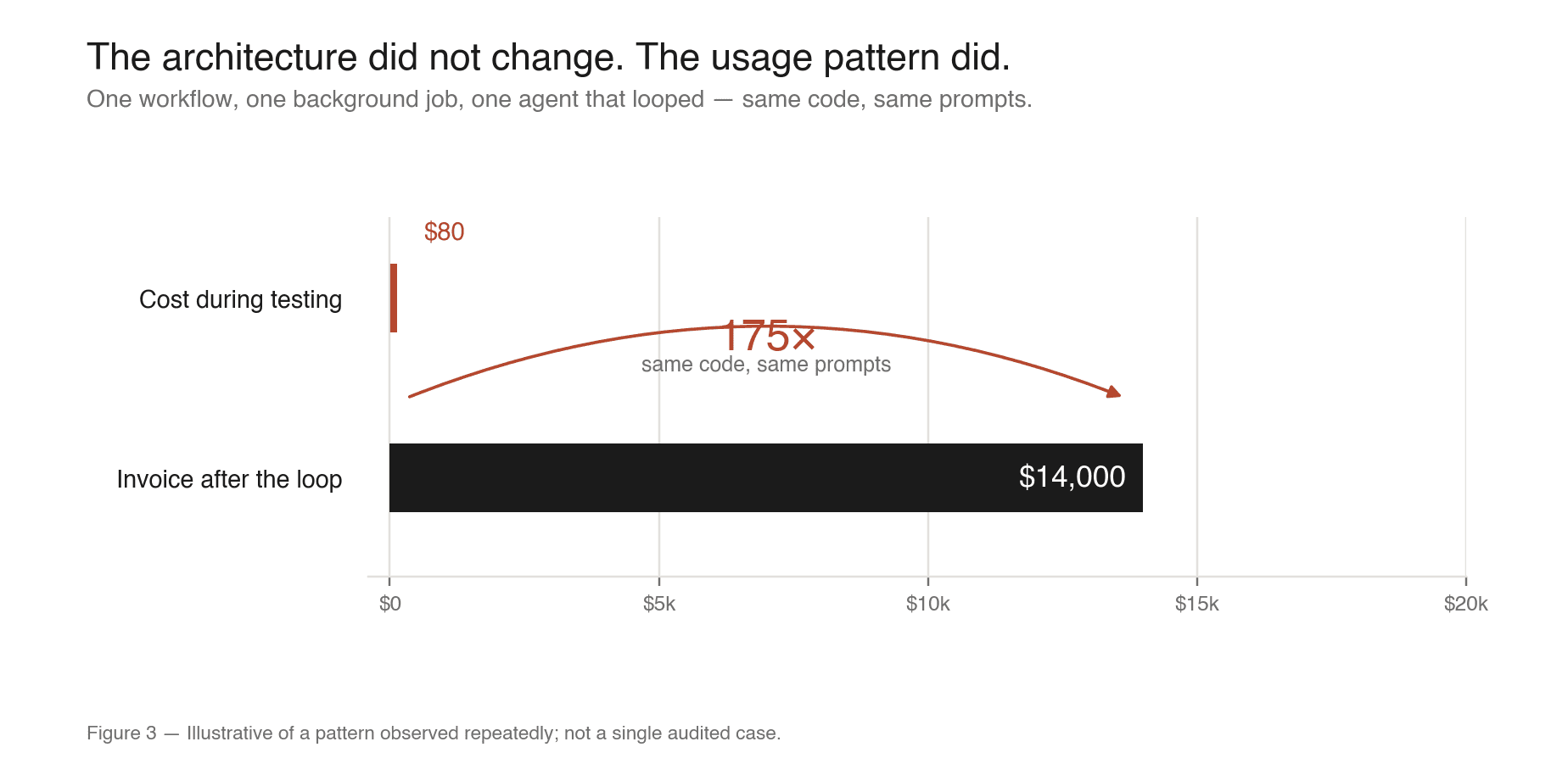
These aren't abstract figures from an industry report. They're real invoices that hit real teams. A senior engineer at a 40-person fintech company publicly shared a before-and-after: during prototyping, two engineers ran about $80 a month in API costs; once shipped, the same code and the same model, now facing real production traffic, pushed the bill to $14,000 a month. A 12-person data analytics firm did its own math and found that tool definitions alone (the portion of a prompt that describes what external tools an agent can call) were costing an extra $1,800 a month. Together, these cases point at one thing: as long as your workflow is bound to a single vendor's single model, your cost structure was never actually in your hands — it moves whenever the vendor decides to move it.
| Vendor / product | Real 2026 pricing change | How it actually hit users |
|---|---|---|
| DeepSeek V4 | API pricing up 51%–1,100%, cache-discount pricing up to 12x higher | Took effect Aug 16, 2026 per official notice, no transition period |
| GitHub Copilot | Billing shifted from per-request to per-token; sticker price unchanged | Heavy agentic users saw real costs rise 3–4x, some models up to 27x |
| OpenAI GPT-5.4 → 5.5 | OpenRouter measured real cost change for the same switcher cohort | Real costs rose 49%–92% for identical workflows |
| A 40-person fintech company | Real billing jump from prototype to production | Same code, same model — monthly bill rose from ~$80 to $14,000 |
Three hours in February 2026 separated who had a fallback from who didn't
A more direct stress test happened in late February 2026. Around the same time Anthropic got excluded from federal contracts, Claude suffered roughly three hours of service disruption. During those three hours, organizations that had bound their entire workflow to Claude alone simply stopped — no fallback model to switch to, support, code generation, and internal automation all stalled at once. Teams that had already built a multi-model architecture, meanwhile, just rerouted traffic to another model and kept running; most of their users never even noticed anything upstream had gone wrong. Those three hours didn't change any vendor's technical capability. They only revealed who had built themselves an exit beforehand.
This kind of risk isn't a fringe case. A 2026 a16z (the Silicon Valley venture firm Andreessen Horowitz) survey of 100 enterprise CIOs found 37% were already running five or more AI models in production, up from 29% a year earlier. A separate survey found 81% of U.S. enterprise executives are at least somewhat concerned about over-dependence on a single AI vendor, with 29% saying they're very concerned, and 47% saying losing their primary vendor would directly disrupt a key business function. Zapier's survey broke the worry down further: 46% named over-dependence on a single vendor as a top risk, 46% worried about difficult data migration, 44% about declining service quality, 41% about sudden price hikes, 37% about a single point of failure. Taken together, these numbers say one thing: more organizations no longer treat single-vendor lock-in as a reasonable default. They treat it as a risk to actively route around.
Single-vendor AI dependency carries a risk profile that looks a lot like single-supplier dependency in any other critical system: it works fine until it doesn't, and when it breaks, it breaks all at once.
Sovereign AI isn't a compliance buzzword — it's four concrete, checkable questions
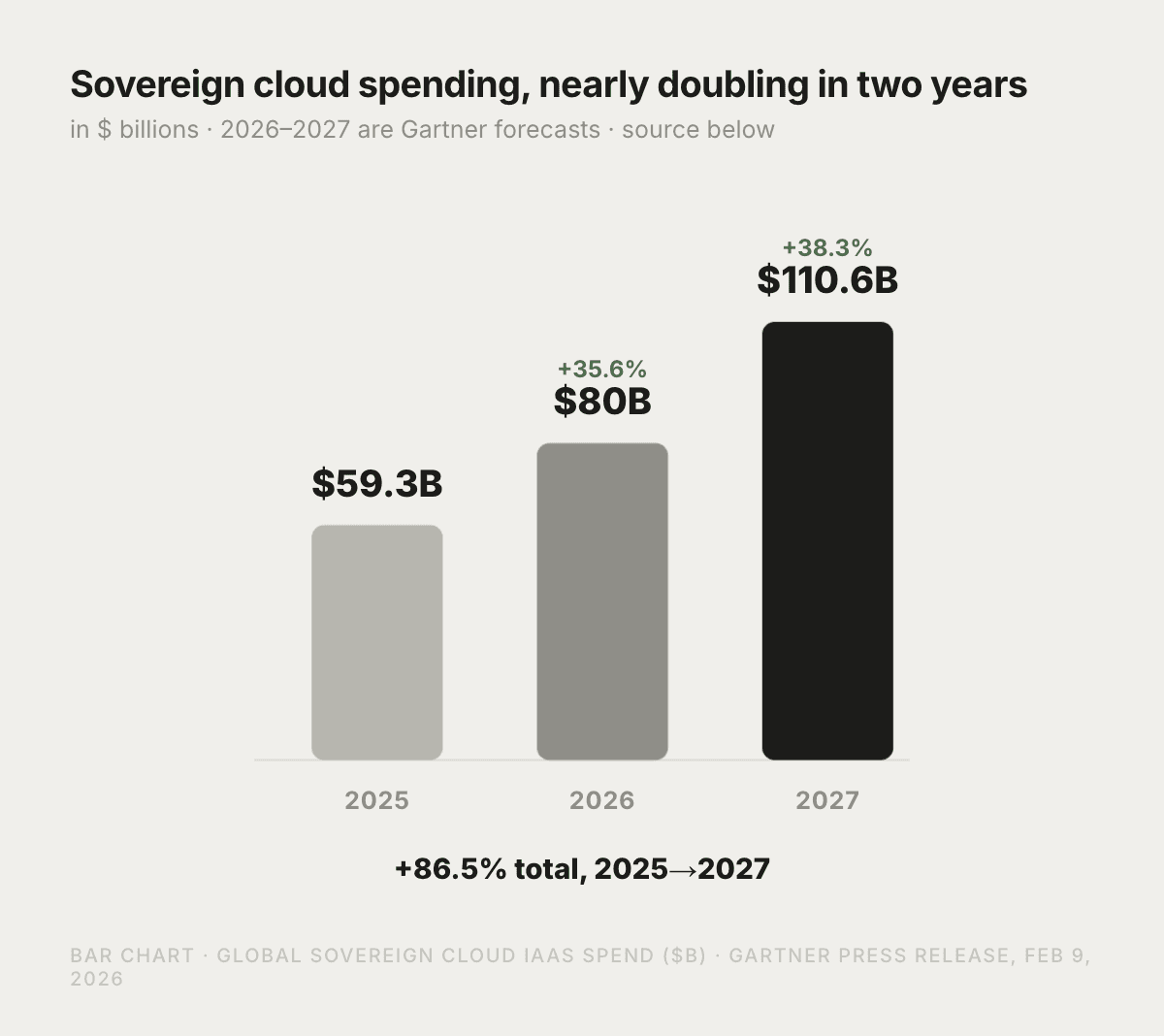
The phrase "sovereign AI" has gotten a bit overused the past couple of years, and what ranks at the top of search results is almost entirely bank, government, and insurance compliance scenarios — a bank requiring data to stay in-country, a government agency mandating models run on state-owned cloud. Gartner's February 9, 2026 press release put a specific number on it: global sovereign cloud infrastructure (IaaS) spending is projected to hit $80 billion in 2026, up 35.6% from $59.3 billion in 2025, and climbing further to $110.6 billion in 2027. Of that spend, China accounts for roughly $47 billion, North America about $16 billion, with the Middle East and Africa, mature Asia-Pacific, and Europe growing fastest at 89%, 87%, and 83% respectively. Gartner calls this "geopatriation" — organizations proactively relocating workloads and data back on-shore in response to shifting political and regulatory conditions.
But break that enterprise framework apart and it comes down to four concrete questions anyone can check themselves against. First, whose machine is the compute running on — a server room you'll never see, or your own phone and computer. Second, does the data ever leave your device — does every exchange have to pass through a third-party server before it becomes the answer you wanted. Third, can you swap the model — are you locked into one vendor's API and price sheet, or can you decide for yourself to run Claude today, switch to Gemini tomorrow, and run a fully offline local model the day after. Fourth, is the memory actually yours — when an account gets banned, a vendor raises prices, or a service shuts down, does your working memory and history disappear along with it, or does it stay in your hands. The Pato Molina incident above hit the first question (compute never in his hands) and the fourth (memory locked to a frozen account). The DeepSeek and Copilot price hikes hit the third. So did the three-hour outage in February.
| Dimension | The real event it maps to | The question an ordinary user can ask themselves |
|---|---|---|
| Infrastructure | Anthropic's ban on the Buenos Aires team — 60+ people lost access instantly | Whose server does my AI run on, and can that company cut it off unilaterally |
| Data / memory | OpenAI community case: four years of chat history vanished with the banned account | If my account got banned tomorrow, would my working memory disappear with it |
| Model | DeepSeek's same-day price hike up to 1,100%; Copilot's real cost up 3–27x | If my current model suddenly got more expensive, could I switch the same day |
| Operations / redundancy | Claude's 3-hour outage in Feb 2026 — single-vendor organizations stopped cold | If the one model I depend on suddenly went down, how long would my work actually stall |
Owning the device isn't enough — the boundary has to be a mechanism, not a suggestion
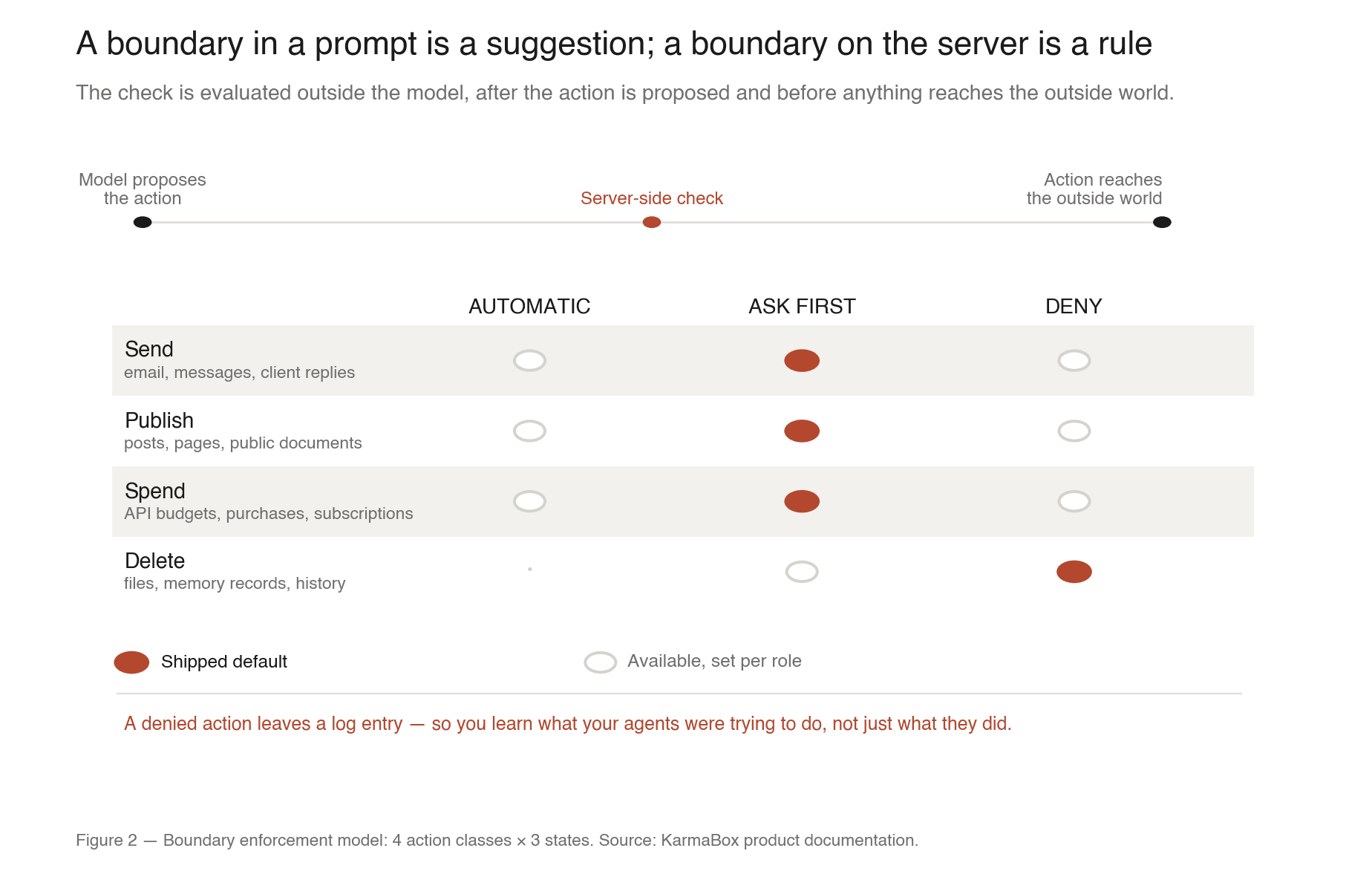
Moving compute to your own device only answers one question: whose machine. A more easily overlooked one is this — is the permission you hand your AI avatar a polite sentence in a prompt, or a rule enforced in the system that can't be talked around. I've seen this go wrong more than once: someone adds "don't send the internal price sheet to clients" to a prompt, and a later turn in the same conversation talks the model into pasting it anyway, because a prompt instruction is ultimately a suggestion — it can be overridden by a later instruction during reasoning. It isn't enforced. A boundary you can actually rely on has to live server-side, as a checkpoint the model itself cannot route around, instead of hoping the model "remembers" a polite request.
Inside KarmaBox, we turned this into a matrix of four action classes against three states. Send, publish, spend, and delete are the four action classes that carry real consequences, and each one can independently be set to automatic, ask first, or deny. For most day-to-day work — research, drafting, organizing meeting notes — an avatar runs automatically without interrupting you at every step. But the moment it touches one of those four action classes, the boundary is enforced server-side, regardless of whether the avatar currently "feels like" complying.
Context, knowledge base, and memory are three different things
"Memory" gets used loosely these days — plenty of products call "how much history fits in the context window" memory, but that's a different thing entirely. I use two simple tests to tell them apart. First: ask the avatar what it decided for you last Tuesday. If the only way to answer is scrolling back through chat history rather than the avatar pulling from a persistent memory file, that's just context — it's gone the moment the conversation closes or the window overflows. Second: ask it to forget something specific. If it can't do precise forgetting and the only workaround is starting a new conversation, there's no memory store behind it that you can read, edit, or delete — just an opaque black box.
Accounts get banned, bills explode, models change — four failure modes, plus one quieter one
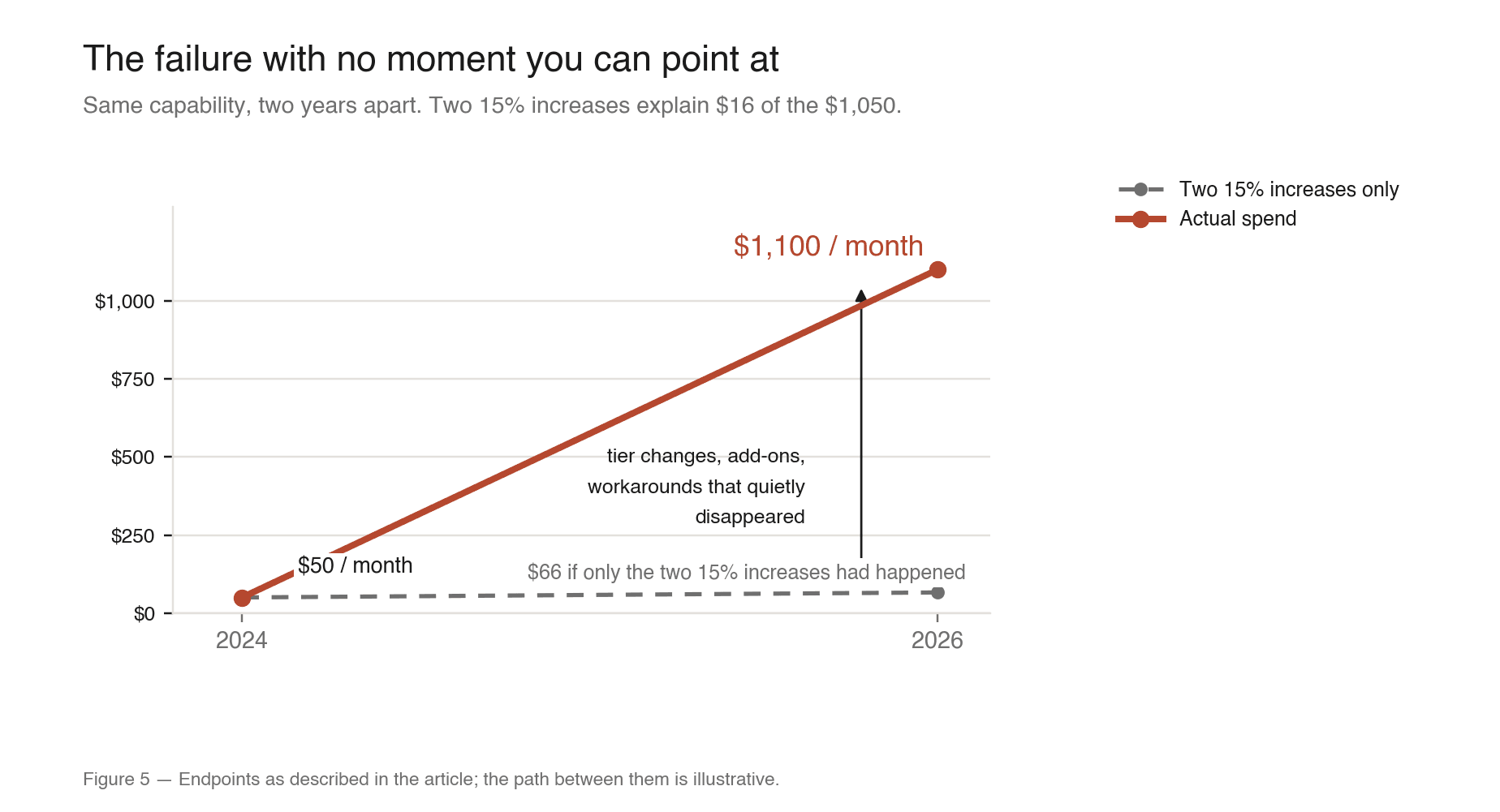
Group the incidents above and they fall into roughly four failure modes: account events (a platform unilaterally bans or restricts access — the Pato Molina incident belongs here), billing events (pricing rules change abruptly — the DeepSeek and Copilot hikes above belong here), model events (a model version is deprecated or its behavior shifts, forcing a full prompt rewrite), and export events (you want to leave a platform and find the data format is closed, or there's no export at all). Beyond those four, there's a quieter, easier-to-miss fifth pattern: slow drift. Instead of one price hike, prices creep up in several steps of roughly 15% each — small enough that no single increase makes anyone want to leave — while features get progressively carved off into pricier tiers. Over two years, the same team's monthly spend can climb from $50 to $1,100, with no single jump large enough to raise an alarm, even though the cumulative total is nowhere near what anyone agreed to pay.
That billing jump from earlier ($80 to $14,000) wasn't caused by the code getting more complex. It was the same code, the same prompts, hitting a 175x multiplier once real traffic showed up. The architecture didn't change. The usage pattern did.
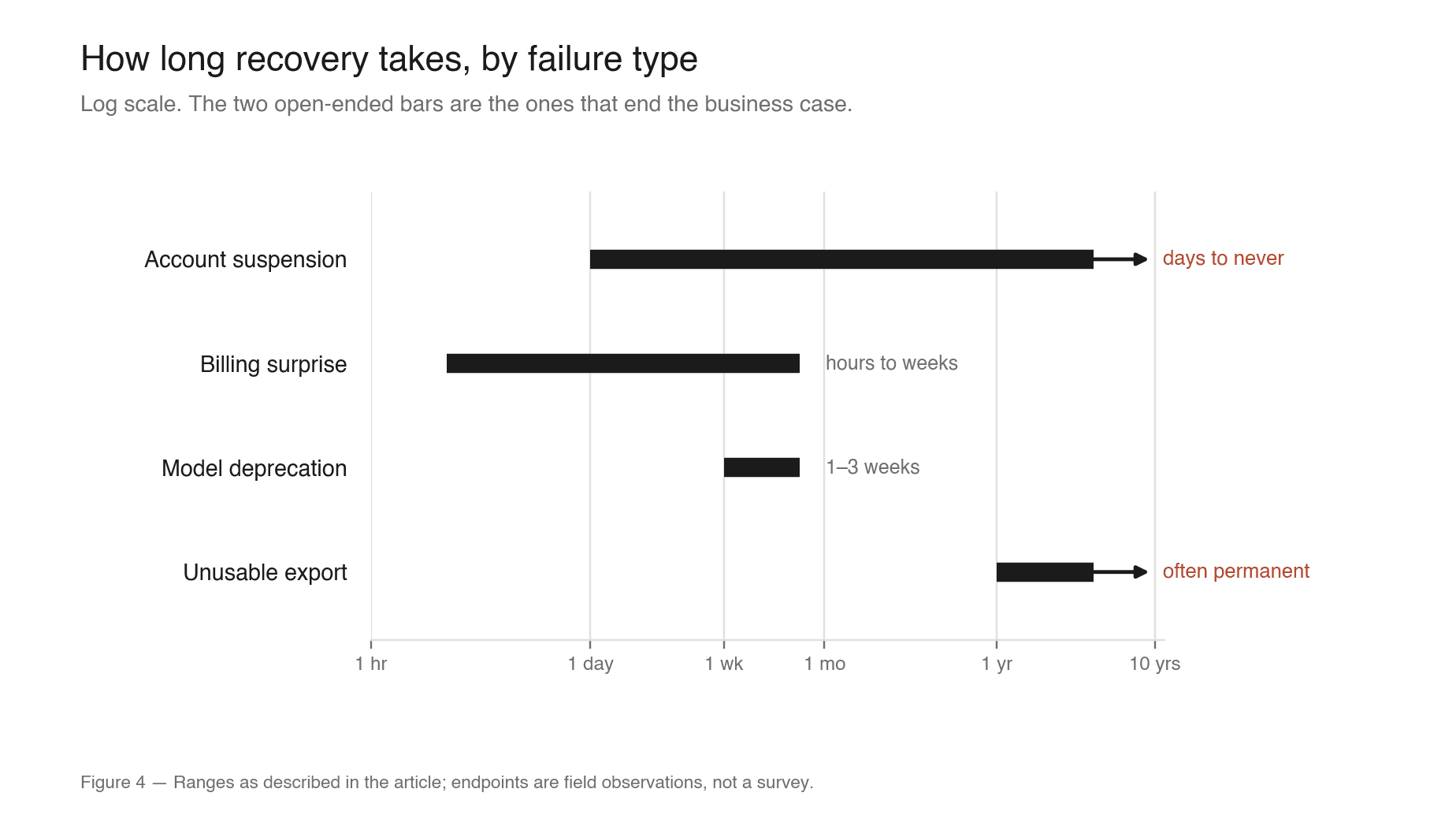
Recovery time varies enormously across the four failure modes. A model event usually costs hours to days of re-tuning prompts. Account events and export events, though, sit on an open-ended timeline — weeks to months, sometimes never. A problem measured in hours and a problem that might be measured in "never" don't belong in the same mental bucket.
Slow drift is the hardest pattern to notice, because no single increase is large enough to react to. Two 15% price bumps only explain $16 of the climb from $50 to $1,050 — the rest comes from features getting carved into pricier tiers and usage habits quietly being nudged upward. Look back after two years and the same work now costs more than twenty times what it did.
Five self-check questions — if you can't answer them, it's time to act
You don't have to wait for an incident to think about these. Run your current setup through them now:
| Self-check question | If you can't answer, here's what to do |
|---|---|
| If your account closed right now, what would stop | List every workflow that depends on this one account |
| Where exactly does your memory file live | Find it, confirm you can read and back it up directly |
| Can you switch models without rewriting every prompt | Separate task logic from model-specific wording |
| What did you actually spend last month, and on what | Pull the itemized bill, not just the summary total |
| When you hit delete, is it real deletion or just hidden | Check the vendor's documentation; if unclear, assume it's hidden |
What running local-first actually looks like
Here's what our own day-to-day setup looks like: a single workstation with 128GB of unified memory, drawing about 170W, handles a meaningful share of daily inference on its own. Two of those linked together bring unified memory to 256GB. Nineteen avatars are registered in the system, but daily use concentrates on four — documents, research, code, inbox — each routed to a different model by task type, including deliberately picking a different vendor from the primary model for cross-review. Anything confidential runs only on local weights and never leaves the device. Every action touching send, publish, spend, or delete keeps an audit log you can walk back through afterward to see who decided what, and when. Worth being honest about: local compute still has a throughput and concurrency ceiling — several avatars running heavy tasks at once during peak load will queue. Right now that's managed by scheduling work to avoid the peak, not pretended away.
Open-weight models have caught up — and that changes the math
"Controlling your own model" used to sound like an idealistic stance, because the tradeoff was clear: give up frontier capability in exchange for control. That math needs recalculating now. Stanford's AI Index 2026 report shows the gap between the top closed model and the top open-weight model on Arena Elo (a ranking built from large volumes of real head-to-head user votes) narrowed to 3.3% across 2025 overall.
As of March 2026, the gap between the top closed and open-weight models on Arena Elo is 1,503 points versus 1,454 — roughly 49 points. Back in May 2023, that gap was 17.5 to 31.6 points. The assumption that only a closed frontier model is good enough is itself going stale.
That directly affects the decision of whether to bind yourself to a single model vendor. IDC (International Data Corporation, a tech-market research firm) projects in its 2026 AI FutureScape report that by 2028, 70% of top AI-driven enterprises will use dynamic multi-model routing architectures rather than relying on one model for everything. A separate industry analysis found that organizations using a single large model for every task pay 40% to 85% more, on average, than organizations using intelligent routing (automatically assigning each task to whichever model fits it best). This isn't a claim that open models have fully overtaken closed ones. It's that once the gap narrows to single-digit percentages, "I have to lock in for the capability" stops being a valid reason.
Enterprises are already hedging this risk — individuals finally have the means to as well
Every number above — 37% of enterprises running five-plus models, 81% of executives worried about vendor dependency, Gartner's geopatriation trend — describes the same underlying move: organizations with resources are actively building themselves a fallback. The problem is that building one used to require enterprise-scale resources — a dedicated infrastructure team, the know-how to maintain multiple model integrations and routing logic at once. An individual developer, a freelancer, a five-person team obviously couldn't replicate an enterprise-grade multi-model failover setup on their own.
But that bar is dropping. Open-weight models have caught up in capability, phones and personal computers now carry enough compute for a meaningful share of inference work, and — more importantly — the principles of local-first execution, swappable models, and owned memory have started getting packaged directly into the product layer, no deployment scripts or infrastructure knowledge required. A handful of real products are already building toward personal sovereign AI:
| Product | Positioning |
|---|---|
| Open WebUI | A self-hosted AI workspace running on infrastructure you choose |
| AITopus | Runs locally by default, works offline, end-to-end encrypted throughout — a clear private sovereign AI approach |
| iYan | Tagline is literally "the AI workspace you own" — plug in any model or tool, never stuck in one cloud vendor's ecosystem |
These products show personal sovereign AI isn't hypothetical — it's a real need several teams are independently validating. Most of them, though, only cover one or two of the four dimensions so far; few put running on your own device, persistent memory, and free model routing together in one package.
What KarmaBox is trying to do: fit all four dimensions into a phone
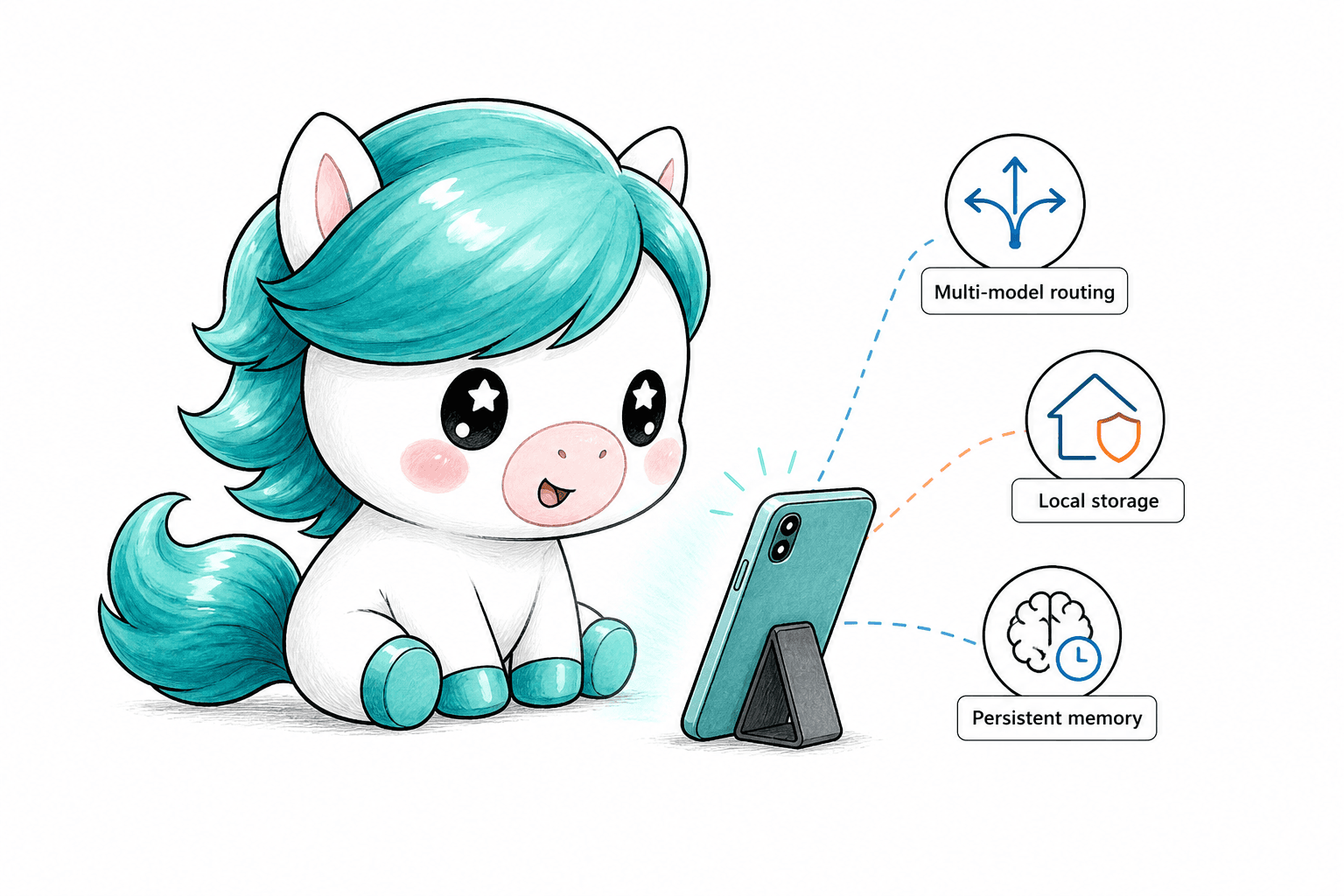
When we built KarmaBox, the starting point was those same four dimensions, and we didn't want to leave any of them half-done. On compute, your phone and your own computer form a private compute pool, so your AI avatar actually runs on your own device rather than some server room you'll never see — this directly addresses what the Pato Molina incident exposed: compute that was never in your hands, which a vendor can cut off at will. On data and memory, end-to-end encrypted local storage is the default, so conversations and work records don't vanish just because an account gets banned or a service shuts down. On models, Claude, Codex, Gemini, and local models are orchestrated together, with tasks automatically routed by type, so you're never locked to one vendor's price sheet — this addresses what the DeepSeek and Copilot price hikes, and that three-hour outage in February, exposed: with no fallback, all you can do is absorb the hit.
More concretely, anything sensitive pauses for your confirmation first instead of the system deciding on your behalf. Multiple avatars can work on different tasks in parallel, then hand you the result along with what it's based on. None of it requires writing code — you describe what you want an avatar to do, in plain language. This doesn't mean individuals and small teams no longer need to think about these risks. It means that the real incidents described above — an account that can be banned overnight, a price that can spike overnight, a single dependency that can stop overnight — finally have a response that doesn't require a dedicated infrastructure team to use.
Where this approach is genuinely worse
Local-first isn't free of tradeoffs. At low volume, maintaining your own hardware actually costs more than metered cloud usage — if you're only asking a few dozen questions a month, renting beats owning by a wide margin. On the hardest reasoning tasks, local models still trail the most capable closed models; the gap is narrowing, but it hasn't closed. Someone has to own maintenance — driver updates, storage expansion, adjusting routing rules — none of that happens on its own. In this architecture, a phone is better suited to dispatch than delivery: quick checks and simple approvals work fine on a phone, but the heavy lifting still runs on the more capable local machine. There's also a harder-to-quantify cost: the rules for what runs automatically, what asks first, and what's denied can be set too loose and miss something that should have been caught, or set too tight until people reflexively click approve and the confirmation step stops meaning anything. That boundary needs periodic review and adjustment, like firewall rules — it isn't something you configure once and leave alone.
Frequently asked questions
Q: Is a sovereign AI workspace the same thing as self-hosting a server?
A: Not exactly. Self-hosting a server only addresses the compute layer — data, model, and memory can still be rented elsewhere. A sovereign AI workspace refers to the state of all four layers together; self-hosting is just one way to own the compute layer specifically.
Q: Does this mean giving up the cloud entirely?
A: No. The more realistic approach is routing: most day-to-day tasks run locally, and the few that need frontier capability or exceed local compute get routed to the cloud, with your own authorization.
Q: Is it expensive to run?
A: Electricity itself is trivial — a workstation drawing around 170W running continuously is a small recurring cost. What actually drives cost is task volume, not the hardware's power draw.
Q: What happens to the data if you stop maintaining it?
A: Memory is, fundamentally, a file. As long as you know where it lives, you copy it out before you stop — there's no scenario where the platform shutting down takes your data with it.
Q: Can one person realistically run all of this?
A: Yes — for an individual or a small team, this is actually the best-case scenario economically. No dedicated operations team required; the four dimensions can be covered by a single existing product.
Back to that Google form
What happened to Pato Molina afterward isn't detailed in anything public. But the question his post raised is worth sitting with for anyone heavily dependent on a single AI tool: if the same thing happened to you — through no fault of your own, just an automated system getting it wrong — would your work, your memory, your team's output all vanish at the same instant, leaving you with nothing to do but fill out a form you don't know who reads or when they'll respond. What a sovereign AI workspace is actually for isn't making you more powerful. It's making sure that when the worst case happens, you still have what was yours.
Sources — incidents and pricing: Pato Molina's public post (April 17, 2026, social media); Anthropic's Transparency Hub data on account enforcement, H2 2025; tech media coverage of AI vendor lock-in incidents including The Register (April 2026); DeepSeek's official pricing notice (August 2026); public reporting on GitHub Copilot's billing model change; OpenRouter's cost analysis of the GPT-5.4-to-5.5 transition.
Sources — industry research: Gartner's February 9, 2026 press release on global sovereign cloud IaaS spending; a16z's 2026 enterprise CIO survey; Zapier's 2026 AI vendor dependency survey; Stanford's AI Index 2026 report; IDC's 2026 AI FutureScape report.
Sources — products and practice: official website positioning from Open WebUI, AITopus, and iYan; local workstation specs and power draw from our own day-to-day usage records.