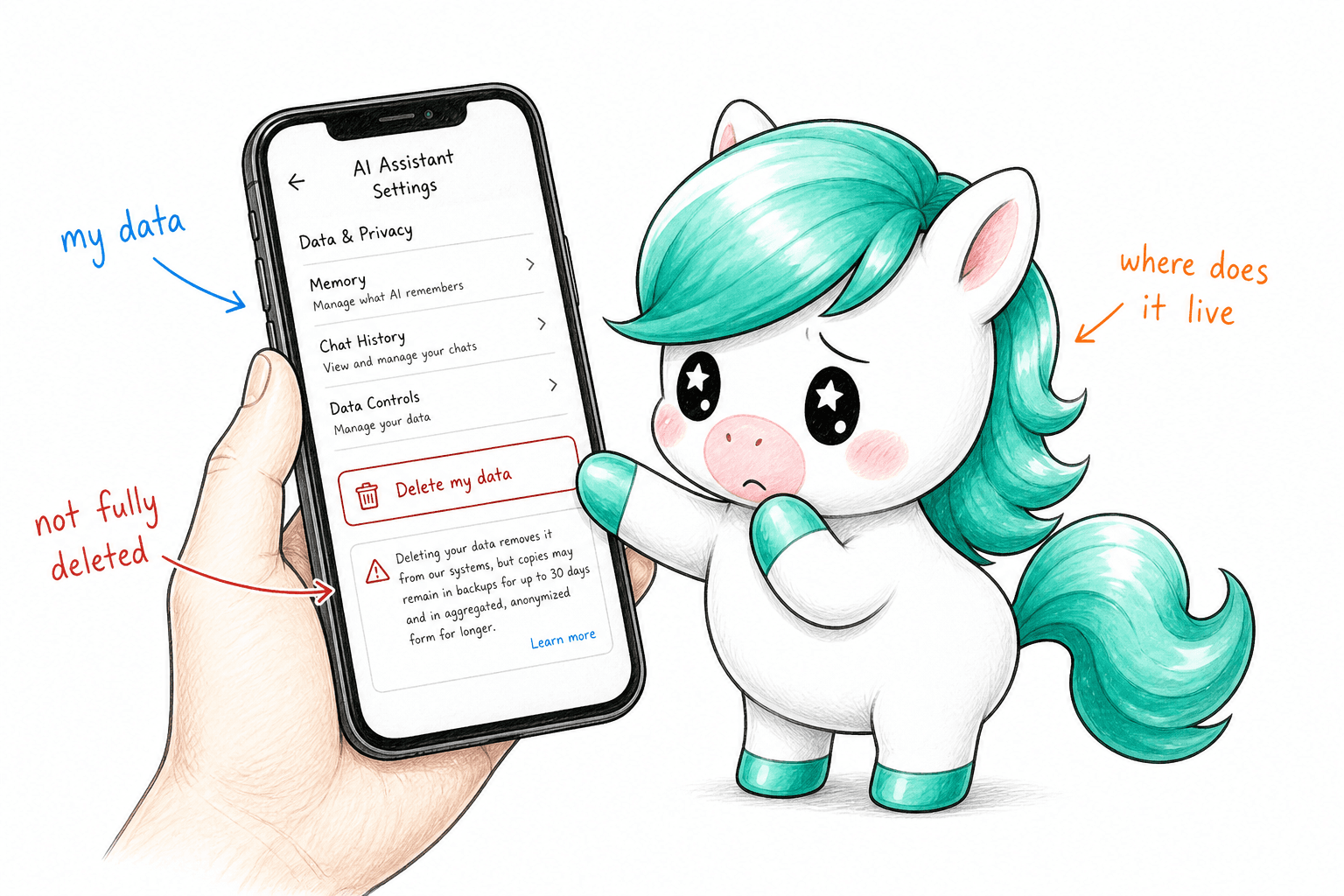
Where we stand, up front: most of this piece is about a problem you probably share — where the things you tell an AI actually go. The later part talks about our own product, KarmaBox; that section is clearly marked and is a product description, not a third-party review. Numbers we quote from other companies come from their own public statements — read them as "vendor's own account."
Let me start with something you may have done yourself.
Not long ago, a colleague tried to cancel an AI assistant she'd used for a year. She opened settings, looked for "delete my data," dug through four menus, and finally found a line of small print: after account deletion, some conversation data may be retained for a period for model-improvement and compliance purposes.
She stared at it and asked me: so everything I told it this past year — is it still there or not?
I couldn't answer for her. Because the answer isn't in her hands. It's on someone else's server.
She isn't alone. In 2026, nearly everyone who uses AI seriously has quietly handed a pile of private things to a place they can't see and can't control — your writing voice, your clients' names, a price you never quoted publicly, the odd questions you ask it at midnight. The more useful it gets, the more you hand over.
This piece says the quiet part out loud: where do the things you tell an AI actually live? Why did this suddenly start to matter? And what can a normal person or a small team actually do? By the end you'll have three things: a method for deciding where your data should sit, a debunking of the three most common misconceptions, and a self-check you can run today.
1. Why "sovereign AI" suddenly got loud
If the phrase "sovereign AI" has been crossing your feed lately, you're not imagining it.
On October 23, 2026, 360 founder Zhou Hongyi, commenting on DeepSeek open-sourcing part of its stack, took a very technical topic and put it in words any business owner understands. His gist: a lot of the AI companies use today is rented — the model, the compute, the platform are all held by someone else. It's like a faucet in your house whose valve is in someone else's hand. They raise the price, you accept it; they change the service or retire the model you depend on, and your work can grind to a halt.
He also offered a framing that's easy to remember — sovereign AI across five levels: nation, institution, enterprise, individual/family, and device. The question "who actually controls the data and the AI" holds at every level, from a whole country down to the phone in your hand.
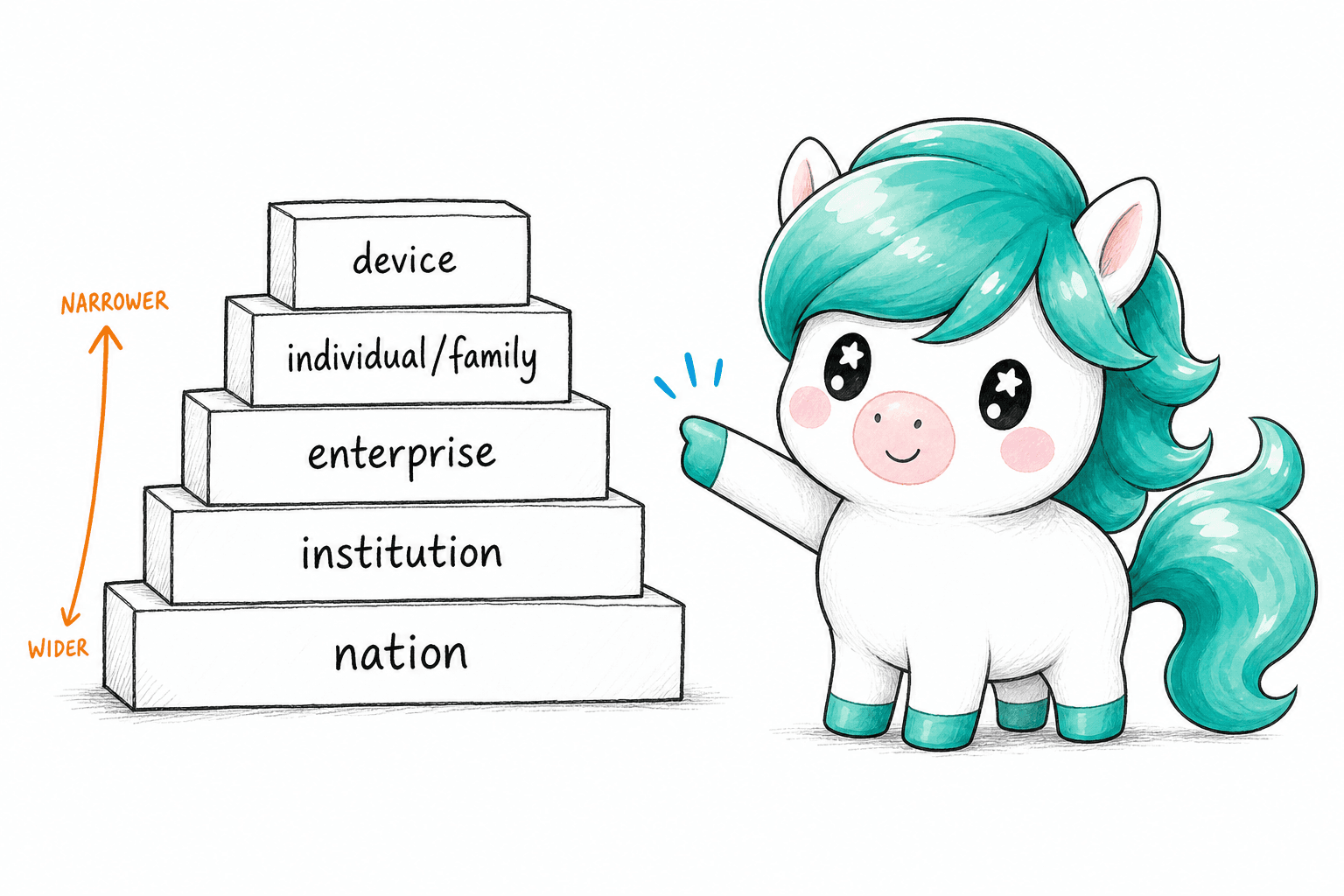
This landed not because it was new — on-prem deployment and data-in-country have been chewed on for years — but because it translated an abstract technical choice into a very human anxiety: the things I painstakingly taught it — do they belong to me or not?
And it isn't only a Chinese conversation. In 2026 the West is pivoting too, from "Cloud-First" to "Sovereign-First." One detail worth flagging: many assume that if your data sits in a given country, it's safe — but privacy researchers abroad keep pointing out a distinction. Where your data lives (data residency) and who can legally compel it (data sovereignty) are two different things. A US-headquartered cloud can store your database in Frankfurt, yet its parent is still subject to US law, and a single warrant can reach data held overseas. "Stored locally" that doesn't mean "you control it" is a guarantee on paper only.
This isn't about chasing a trend. It's a question you'll have to work out sooner or later.
2. Don't let the jargon scare you: sovereign AI is really three things
"Sovereign AI" sounds grand, but it comes down to three plain questions. You don't need to understand any technology — just ask them.
Question one: where is the data?
The files, chat logs, and client records you send an AI — where do they go afterward? Without sovereignty, everything uploads to their servers under their privacy policy; all you can do is tick "don't train on my data" and hope. With sovereignty, sensitive things stay on your own device or private cloud by default and never enter their pipeline. Writing "please don't keep this" into a prompt is a wish. Keeping the data physically on your own machine is a guarantee.
A scenario: a small bookkeeping studio holding bank statements for dozens of clients. An online AI speeds up the work — but which server those statements land on, and how long they're kept, the owner honestly doesn't know. One incident, and what's lost isn't efficiency; it's the clients' trust and the owner's livelihood.
Question two: who owns the model?
Can you tune the AI with your own data, and keep what you build? Without sovereignty, you're chained to one vendor's roadmap: they update, you adapt; they retire a model, you switch; they raise prices, you swallow it. With sovereignty, you move between cloud models, open-weight models, and your own GPU — and what you built stays put.
An easy thing to miss: the valuable part usually isn't the model — it's what the model learned about you. A scenario: a creator spends three months shaping an AI into their own voice — short sentences, no clichés, a hook at the end of every piece. If the platform reprices or retires, that "understanding" can't travel with them; they're hiring a new person who remembers nothing.
Question three: whose hardware runs it?
Whose machine does the work run on? Without sovereignty, you pick a "region" from a dropdown in someone else's data center, and usage, speed, throttling — they decide. With sovereignty, local mode is a first-class citizen: on your own machine you're not metered, not throttled, not spending a quota.
A scenario: a legal team runs hundreds of contracts through at once. Metered in the cloud, the monthly bill is a shock — and are those contracts logged somewhere? On their own machine, it's near-zero cost beyond electricity, and the files never left the building.
Answer even one of these three "mine," and you're ahead of the default — upload everything, then hope. Answer all three "mine," and that's full sovereign AI.
3. Three common misconceptions, debunked
Three traps almost everyone falls into. Clearing them saves real money.
Misconception 1: "If I keep my data on a domestic cloud, it's safe." This confuses residency with sovereignty. Where the data sits answers "will it cross borders." Who operates the system and who can legally compel it is a different question. What to confirm isn't "where did you put my stuff," but "who does my stuff answer to."
Misconception 2: "Sovereignty means cutting the cloud entirely and going all-local." The most expensive extreme. The pragmatic move is to layer it: keep the strongest cloud model for everyday, non-sensitive work; bring only the small slice of core assets somewhere you control. Being able to switch freely is itself part of sovereignty. "All cloud or all local" is a false binary.
Misconception 3: "Local AI must be hard and need an engineer." That's a three-year-old impression. Today you brief a job in plain words and it runs — no code; open-weight models keep getting stronger, and a serious machine gets you started. The technical cost of "bringing it home" has visibly fallen.
4. Why now? Because AI started keeping a memory
The AI of a year or two ago was a stranger who forgets the moment you're done. Today's AI has started to keep a record.
Products lead with "memory": it remembers you dislike a word, your company's report format, a project from months ago. Convenient — but the flip side is it's building a file on you, somewhere you can't see.
Zhou made a point I agree with: as AI does real work for a business, the data, knowledge, and experience an agent accumulates become "the boundary of a company's core assets." In plain words — the more you depend on it, the more what's in its head about you is worth, and the more it's at risk.
Technical communities abroad put it bluntly: every time an agent works, its reasoning trace, the tools it called, the intermediate results — all logged on third-party servers. Those process records are often more sensitive than the sentence you typed — contracts, clinical notes, source files, retrieval logs.
So the logic of "now it matters" is simple: the more useful AI gets, the more of your real work flows through it — and the cost of not owning those records climbs with it.
5. A real dividing line: from "chatbot" to "the AI you hired"
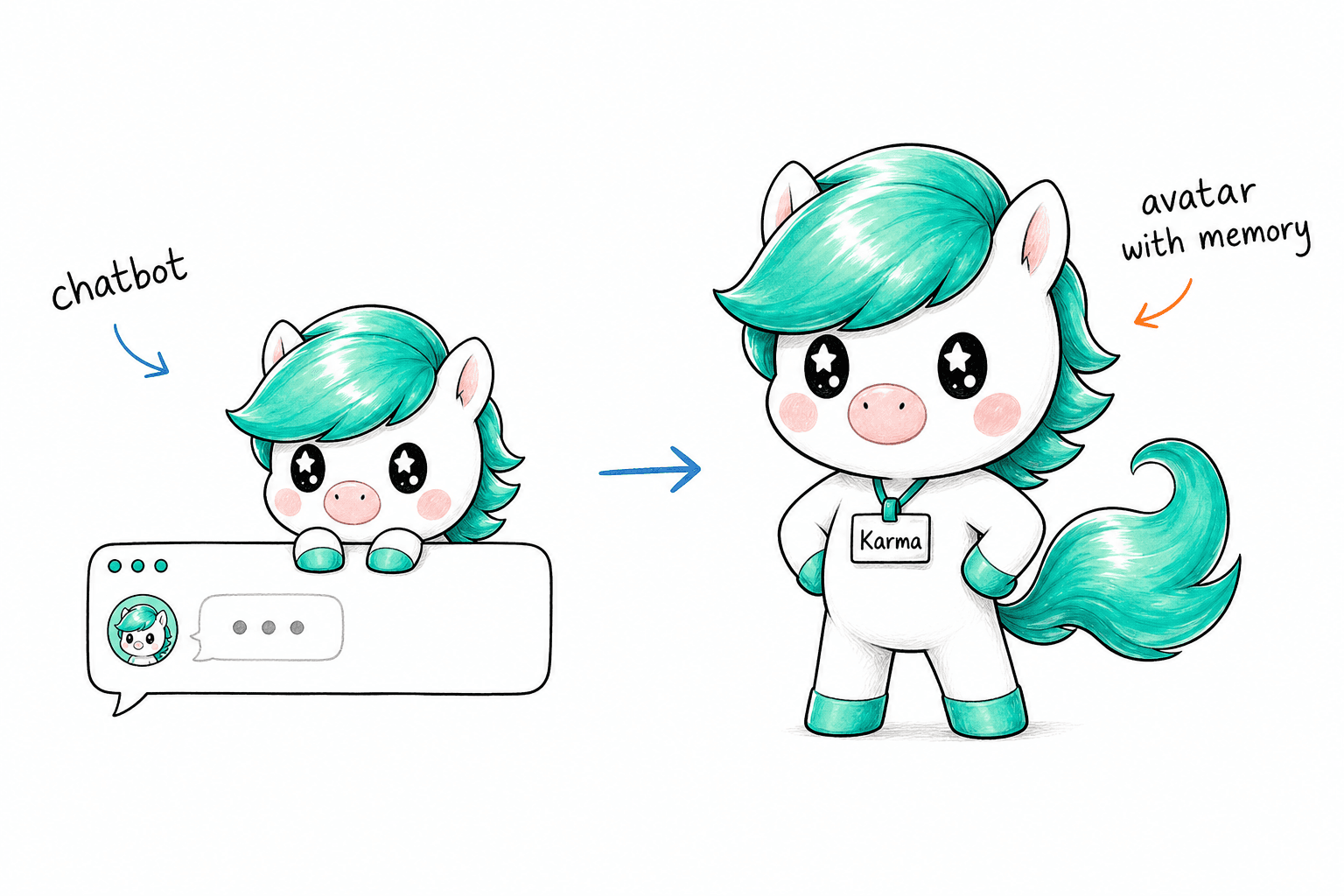
What you want to own isn't a series of conversations — it's one persistent AI that belongs to you.
A chatbot is a window: you type, it answers, you close it, nothing left but a transcript. An AI avatar is different — a persistent worker with a name, a job, a memory, and permission boundaries. You give it a role, and next time it's still holding that role, along with everything it learned. An avatar with memory accrues value like a good employee: a correction you made earlier still holds later.
Examples anyone can use: a content avatar drafts a few formats in your voice and queues them for your nod; an inbox avatar surfaces what matters and drafts replies, leaving "send" to you; a research avatar watches sources and delivers short digests on your schedule; a reporting avatar turns recurring reports into something that arrives without you chasing it.
From "a bot I chat at" to "an avatar I hired and can take with me" — that step is where "renting output" becomes "owning a worker."
💡 How KarmaBox makes this real
What follows describes our own product — not a third-party review.
The three questions above are exactly what KarmaBox lets a normal person or small team answer "mine" to. In one line: KarmaBox is a sovereign AI workspace for individuals and small teams — one place to build the avatars you want in plain language, keep what they learn, and run them on your terms.
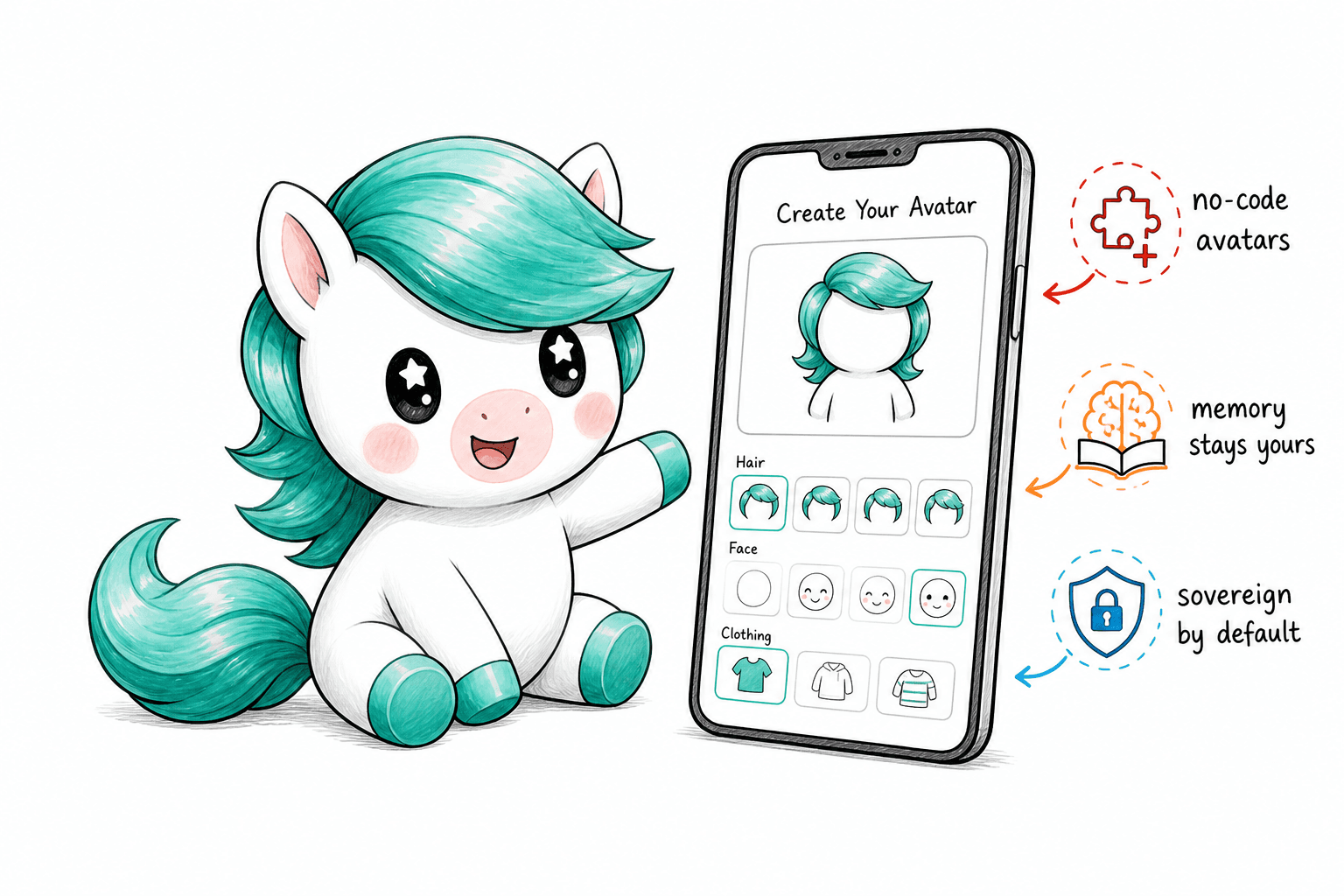
Three core capabilities. Build an avatar with no code — and let them team up. Describe a role in plain language and in five minutes you have your first working avatar, no engineer. Give several avatars different jobs and they collaborate in one space — one researches, one drafts, one reviews — instead of you copy-pasting across four disconnected tools.
Memory follows the avatar, not the model — and it's yours. Switch between cloud, local, and your own GPU; avatars and their history stay intact. The local knowledge base uses bubble retrieval (BFS): each chunk is an "evidence unit" that remembers which chapter, table, or timestamp it came from — so answers can be checked back against the source, not stitched from plausible-looking fragments.
Sovereign by default, control stays with you. Documents and working context stay on your device or private cloud by default, out of any training pipeline. Each avatar carries a signed did:wba identity others can verify. Key actions — send, publish, spend, delete — need your confirmation, gated on the server, not in a polite prompt. Local mode counts as 0 tokens, no usage cap.
Try it: visit karmaboxai.com and build your first avatar for free.
6. Different people, different moves
Sovereign AI isn't an all-or-nothing switch. Priorities differ by who you are.
If you're an individual: you probably don't need a machine yet. Build one habit — non-sensitive questions to the strongest cloud model; truly private things (finances, health, unpublished work) either not fed in or handled by a local-capable option. Get "sorting it" right before worrying about "moving it."
If you're a small team / startup: your core assets are starting to be worth money — client lists, pricing, unsigned contracts, the workflows your team tuned in. Layer it: everyday to the cloud, core assets in a local/private space you can lock, and make sure "switching models doesn't lose the accumulation." This now starts with zero code; you don't have to wait until you can afford an engineer.
If you're in a regulated field (healthcare / finance / legal): sovereignty isn't a choice, it's compliance. In 2026 these fields broadly face finer data-residency and auditability requirements — every step of an automated decision must be traceable, which only holds when logs live on infrastructure you control. For you, local/private isn't a bonus; it's the floor.
7. A few honest limits, stated up front
An article that only sells is worthless. Two real costs.
Cost one: sovereignty asks you to carry a bit more. Owning your AI means pointing at a private cloud, keeping a GPU, tidying a knowledge base. "Upload everything" is easier precisely because the weight (and your data) is carried by someone else. The fix is making the sovereign path low-friction — out-of-the-box local mode, a self-tidying knowledge base. The bar is far lower than a year ago, but hasn't vanished.
Cost two: retrieval quality still depends on what you feed it. Bubble retrieval keeps a file legible after it's chopped up, but it can't clean a messy file or sharpen a vague question. So the honest claim is "the answer can be checked against the source," not "it never errs." Still, an avatar that can tell you "this line came from here" is far easier to trust — and correct — than one that can't show its work.
8. Three small things you can do today
One: run a "where did my data go" audit. Spend ten minutes finding your main AI's privacy policy and data-deletion options.
Two: bring the most sensitive part back first. Pick the category you least want leaked — client records, finances, unpublished work — and prioritize a local-capable option.
Three: start building an AI you can take with you. Before you tune your next assistant, ask: if I leave one day, does what it learned come with me? If "no," what you're building isn't an asset — it's someone else's moat.
Frequently asked questions
Q: Is sovereign AI just "running AI on a local computer"?
A: Not exactly. Local deployment is one means. The core is control: data where you can manage it, a model you can swap while keeping the accumulation, compute on a machine you govern. It can be local, or your own private cloud.
Q: If my data sits on a domestic cloud, do I have sovereignty?
A: That's residency, not sovereignty. Residency answers which country it's stored in; sovereignty asks who operates it and who can legally compel it. Two different things.
Q: Does sovereign AI mean giving up the strongest cloud models?
A: No. The pragmatic move is to layer it: keep the strongest cloud model for everyday work, bring only the small slice of core assets local. Free switching is itself part of sovereignty.
Q: Is local AI expensive, hard, and only for technical people?
A: The bar is lower than you think. No-code avatars get you going; the real hard cost is VRAM, sized to your team's actual concurrency. It's far simpler than three years ago.
Q: If I "delete" my data, is it really gone?
A: Check the terms. Many state "after deletion, some data may be retained for model improvement or compliance for a period." So clicking delete is a wish; data that never left your machine is a guarantee.
Q: What does an AI's "memory" actually store about me?
A: Usually three layers: current conversation context; cross-conversation facts it actively remembers (preferences, habits); and the easily-overlooked "process logs" (reasoning steps, tools called, files read). The third is often more sensitive than what you typed.
Q: Do individuals need to worry about sovereign AI?
A: Depends what you feed it. Recipes and low-stakes copy — no. Finances, health, unpublished work — yes, take it seriously.
In closing: stop renting your AI's memory in someone else's house
Back to my colleague's question — is everything I told it this past year still there or not? The part that stings isn't the answer; it's that she can't answer it herself. When something you care about most is something you control least, it was never really yours.
Sovereign AI isn't a bigger model or a slogan. It puts a long-dodged piece of common sense back on the table: everything an AI learns about you should belong to you. Data in a place you control, a model you can swap while the accumulation stays, compute on a machine you govern — get all three, and what you own is an AI that's truly yours.
Are you ready to bring your AI's memory home? To try it, visit karmaboxai.com and build an avatar that answers only to you in five minutes.
Sources: Zhou Hongyi on DeepSeek's open-sourcing, the five-level "sovereign AI" framing, and the "rented AI" analogy — The Paper (10% Company), 2026-10-23; the same event — Sina Finance, 2026-10-23; the same event — NetEase Tech, 2026-10; on residency vs. sovereignty and the CLOUD Act reaching data held abroad — industry-blog views, for reference: safeguard.sh, activepieces.com (2026 articles).